
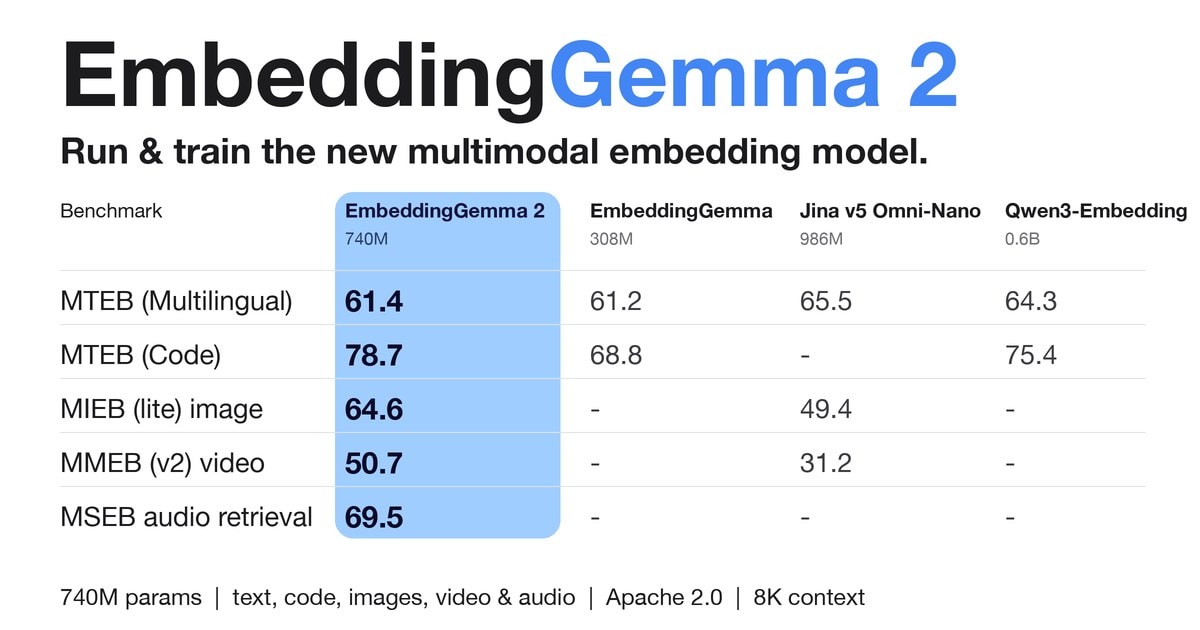
Quick summary: EmbeddingGemma 2 is Google’s new open embedding model. It maps text, code, images, video and audio into one shared 768-dimensional vector space. The full model has 740M parameters (270M text, 170M vision, 300M audio) and ships under Apache 2.0 with an 8K context window. You can load only the text part for small […]
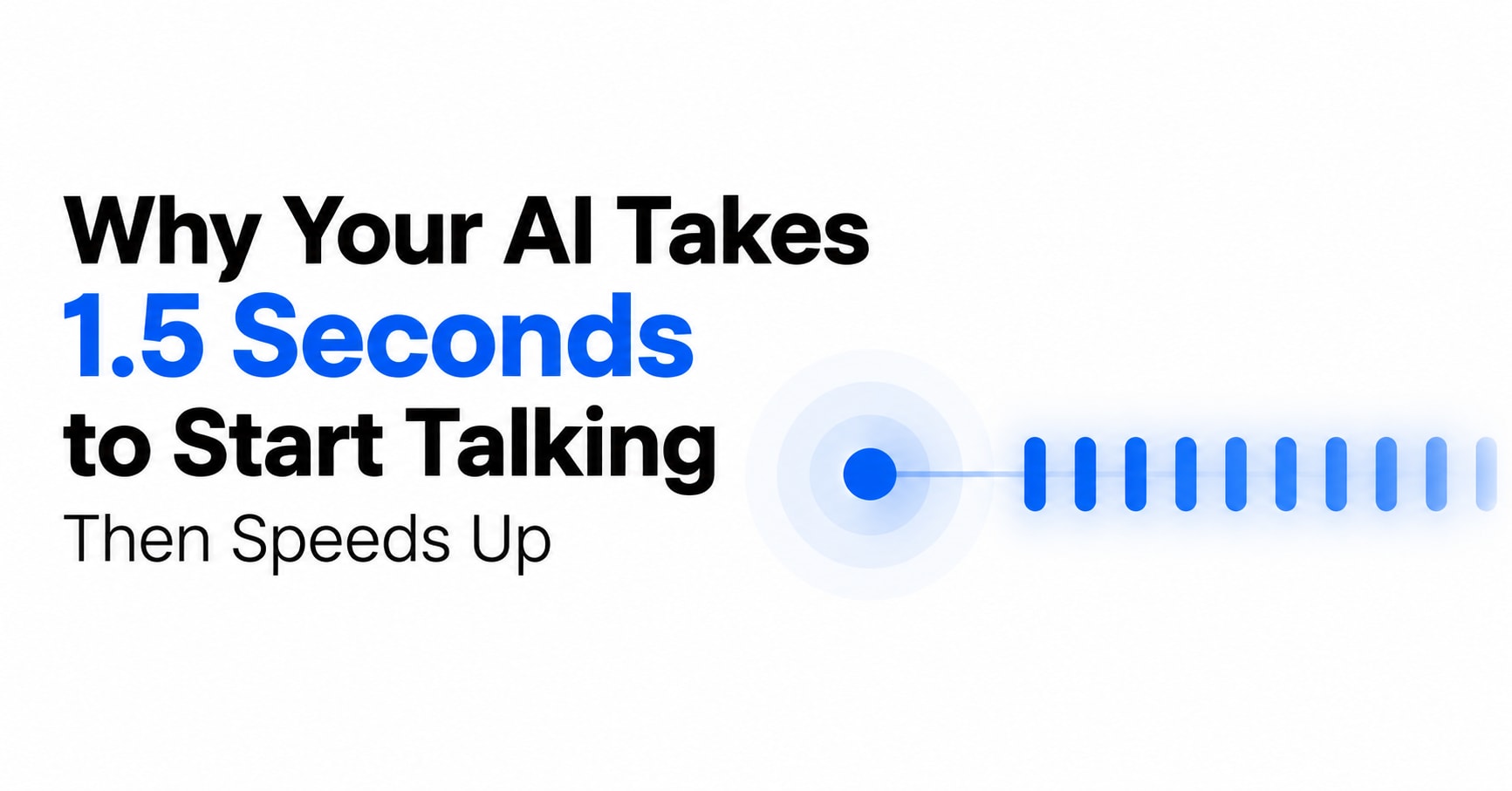
Why does an AI take longer to start than to keep generating? Learn how prefill, queues, caching and serving design affect TTFT.

OpenAI’s Dots launch put dot.com’s redirect to xAI’s Grok Bot in the spotlight. The domain’s reported $20 million price and the reason for the redirect remain unconfirmed.
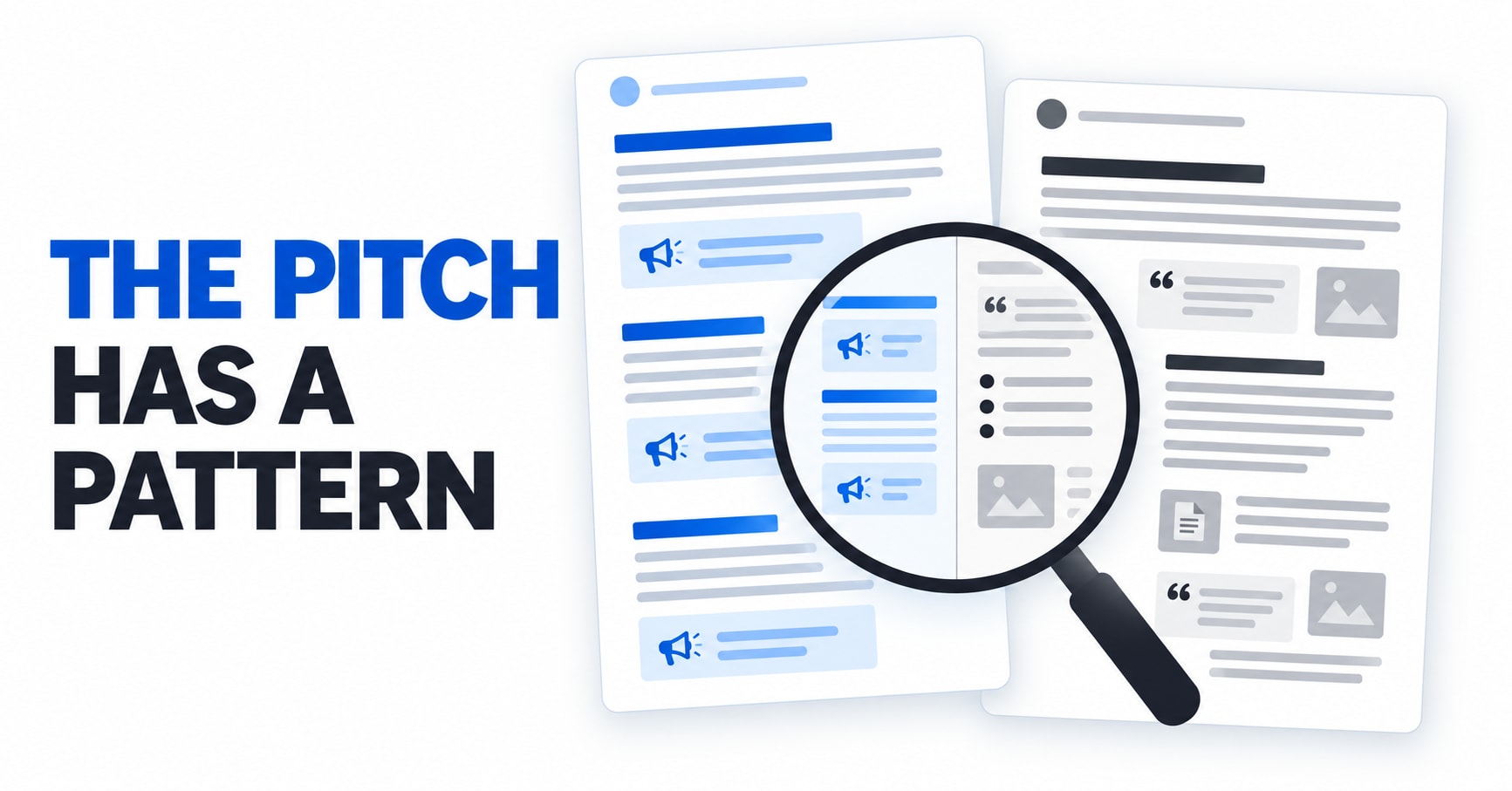
The pitch can change its wording and keep its shape. That is the surprising result behind a new study of AI-written company blogs: an AI-shaped sales pitch may survive after its wording changes. Researchers report that a classifier could still separate AI-generated posts from human originals after the AI rewrote most of its phrasing. The […]
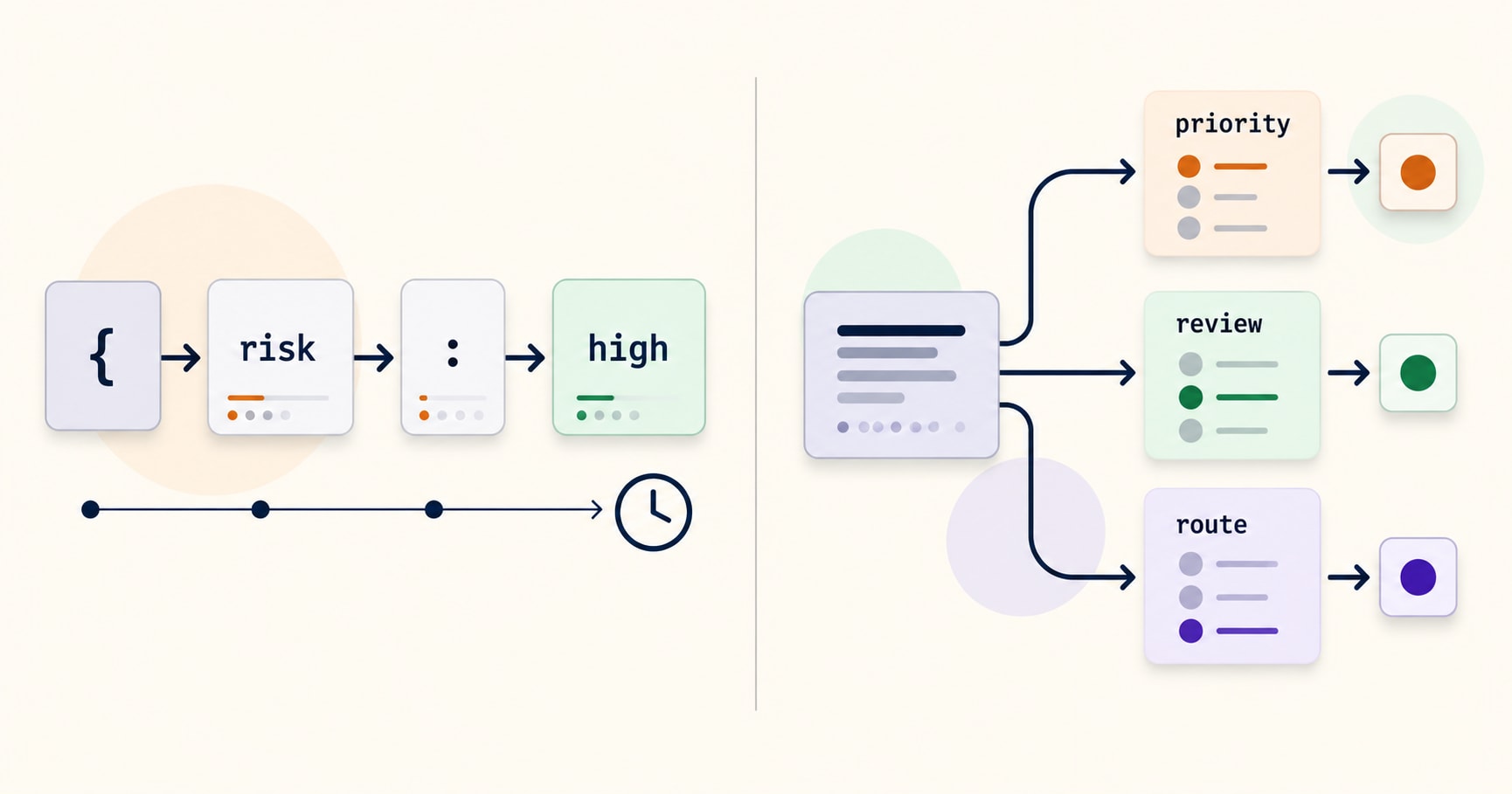
Quick summary Typed decisions: Jev evaluates declared questions in parallel and returns bounded answers instead of generating a JSON string token by token. Keep questions narrow: Define one judgement per field and let application code combine the results. Validate on your own data: Type safety does not guarantee correctness; test accuracy, confidence and review thresholds […]

Quick summary Seven experiments: The article examines reported examples of Astra contributing to game prototyping and development. Follow the development loop: Useful assistance includes interpreting a brief, editing, running the game and repairing observed problems. Distinguish levels of involvement: Generating a prototype, editing a project and testing gameplay are different contributions. Keep human ownership: A […]

Quick summary Punctuation is not proof of authorship: a common AI-associated pattern cannot establish who wrote one article. Edit for clarity and rhythm: keep a dash when it helps and remove it when the sentence reads better without it. Separate trends from individual verdicts: population-level observations have limits as detection tools. Prioritise substance: assess sources, […]

Quick summary The article examines an AGI claim: it connects reported benchmark performance with the compute needed to obtain it. Separate scores from practical value: demanding evaluations do not by themselves establish affordable everyday usefulness. Autonomy creates additional costs: a persistent workflow needs clear goals, spending limits and ways to stop. Treat headline claims critically: […]
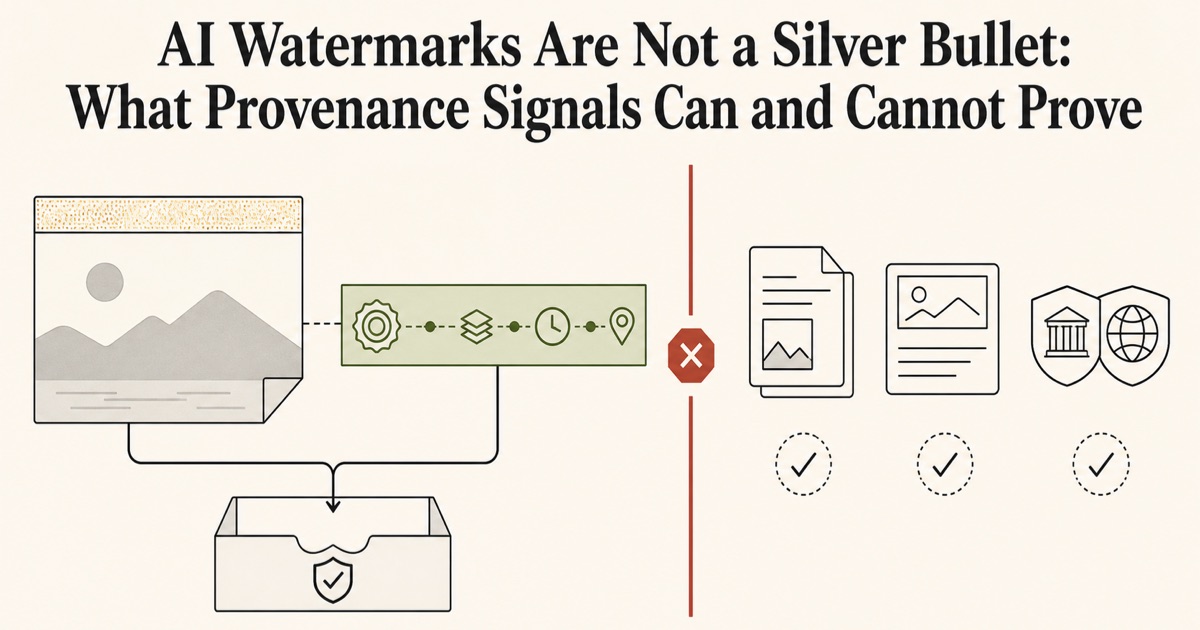
Quick summary AI provenance signals can include C2PA Content Credentials and embedded watermarking. A missing, altered, or unavailable signal is not a final verdict on an image’s origin or reliability. Provenance can inform a decision, but it does not prove accuracy, ownership, or context. The most useful approach combines available signals with source checking and […]
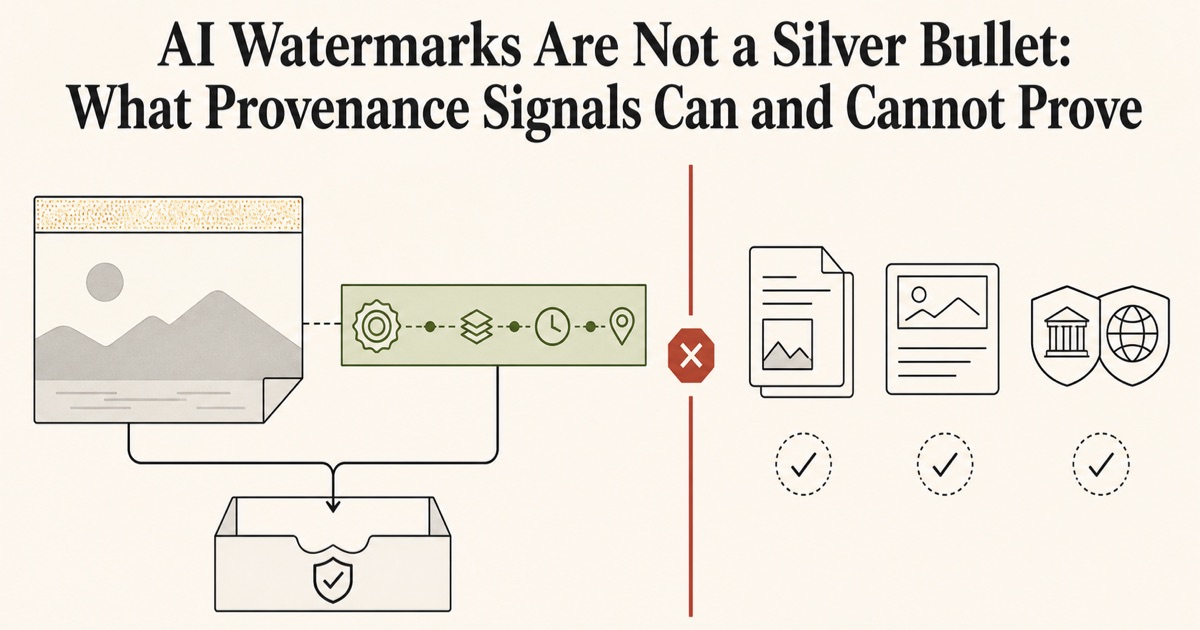
Quick summary AI provenance signals can include C2PA Content Credentials and embedded watermarking. A missing, altered, or unavailable signal is not a final verdict on an image’s origin or reliability. Provenance can inform a decision, but it does not prove accuracy, ownership, or context. The most useful approach combines available signals with source checking and […]
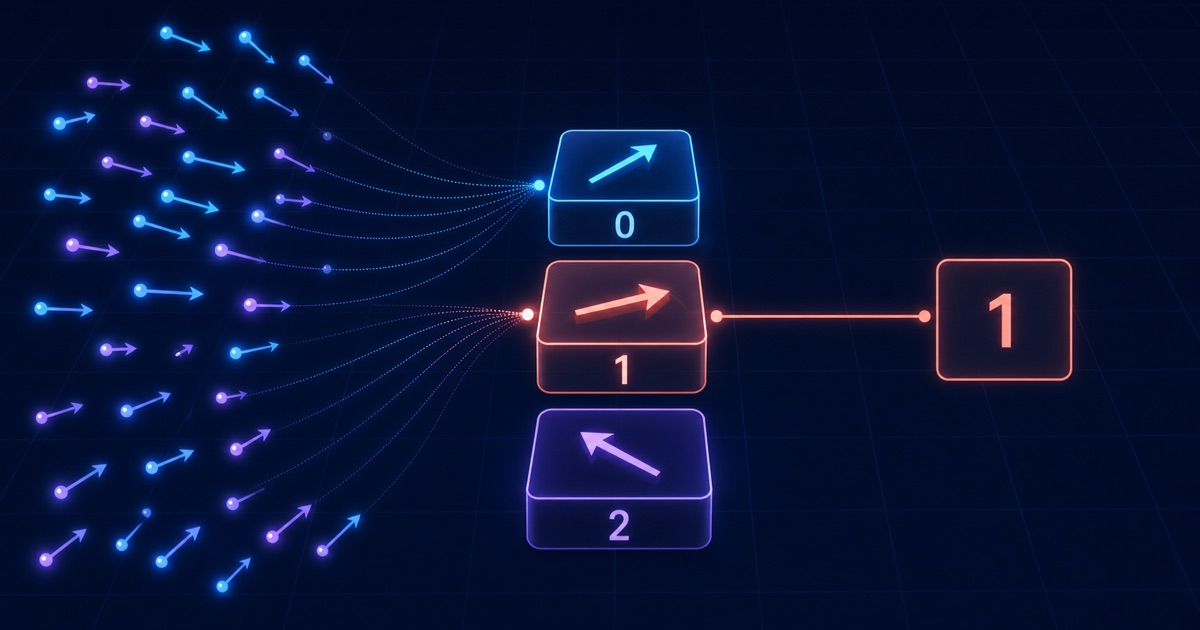
Quick summary A code book stores representative vectors called code-vectors. An encoder chooses the code-vector that is closest under a chosen distortion measure. A decoder uses the transmitted or stored index to look up the selected code-vector. Code-book size and quality affect reconstruction detail, storage needs, and encoder work. Vector quantisation helps when many groups […]

Quick summary TurboVec is presented in its repository as a Rust vector index with Python bindings. The project is described as being built on TurboQuant. Google Research presents TurboQuant as work focused on AI efficiency through extreme compression. Benchmarks, retrieval quality, integration requirements, licensing, and operational fit should be checked against a representative workload before […]

Quick summary Contextual Retrieval adds a short explanation of where a chunk sits in its source document and what it refers to. The added context is used for both embedding-based retrieval and BM25-based retrieval. Anthropic’s 67% figure applies when Contextual Retrieval is combined with reranking in its reported evaluation. A small knowledge base may be […]

Quick summary Combine predictions: Ensembles use voting, averaging or a learned rule to combine multiple models. Different approaches: Bagging, boosting and stacking combine models in different ways. Diversity matters: Models with useful, varied information can improve stability and predictive performance. Compare with a baseline: More models do not automatically improve results; evaluate the combined system […]

Quick summary Interactive generation: The article introduces Genie as a model for generating controllable environments from visual inputs. Learning from video: It describes learning patterns of movement and interaction without explicit action labels. Creative possibilities: Sketches and images provide starting points for exploring generated worlds. Research direction: The article considers uses in creative prototyping and […]