
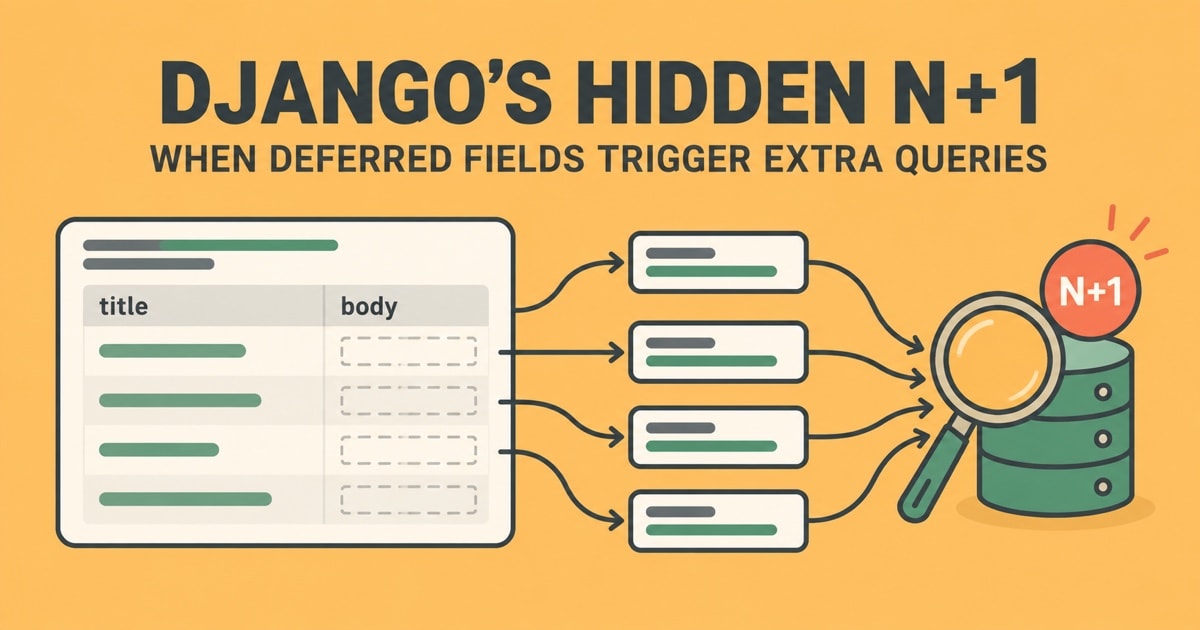
In brief The hidden Django N+1 problem: only() and defer() postpone loading model fields. If a template, serializer, or loop later reads a deferred field for every object, Django may issue one extra query per object. For fields you use on every row, load them in the original query. Use select_related() for foreign-key and one-to-one […]
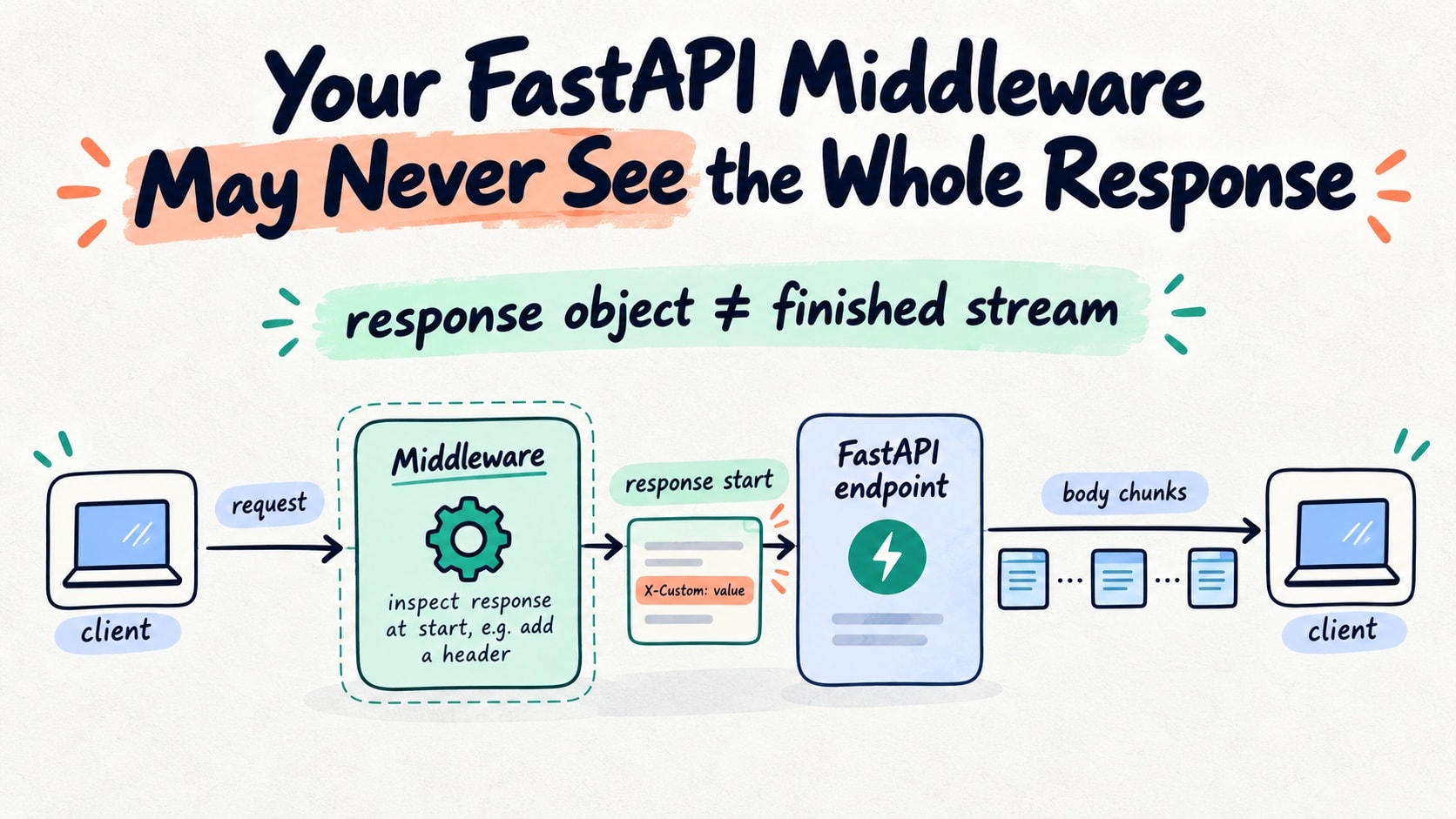
A FastAPI middleware can return a response before a streaming response has finished sending its body. That is the shorthand behind this headline: the middleware can inspect the response object, yet still not have seen every byte the client will receive. To understand why, think of middleware as a wrapper around an ASGI application, not […]
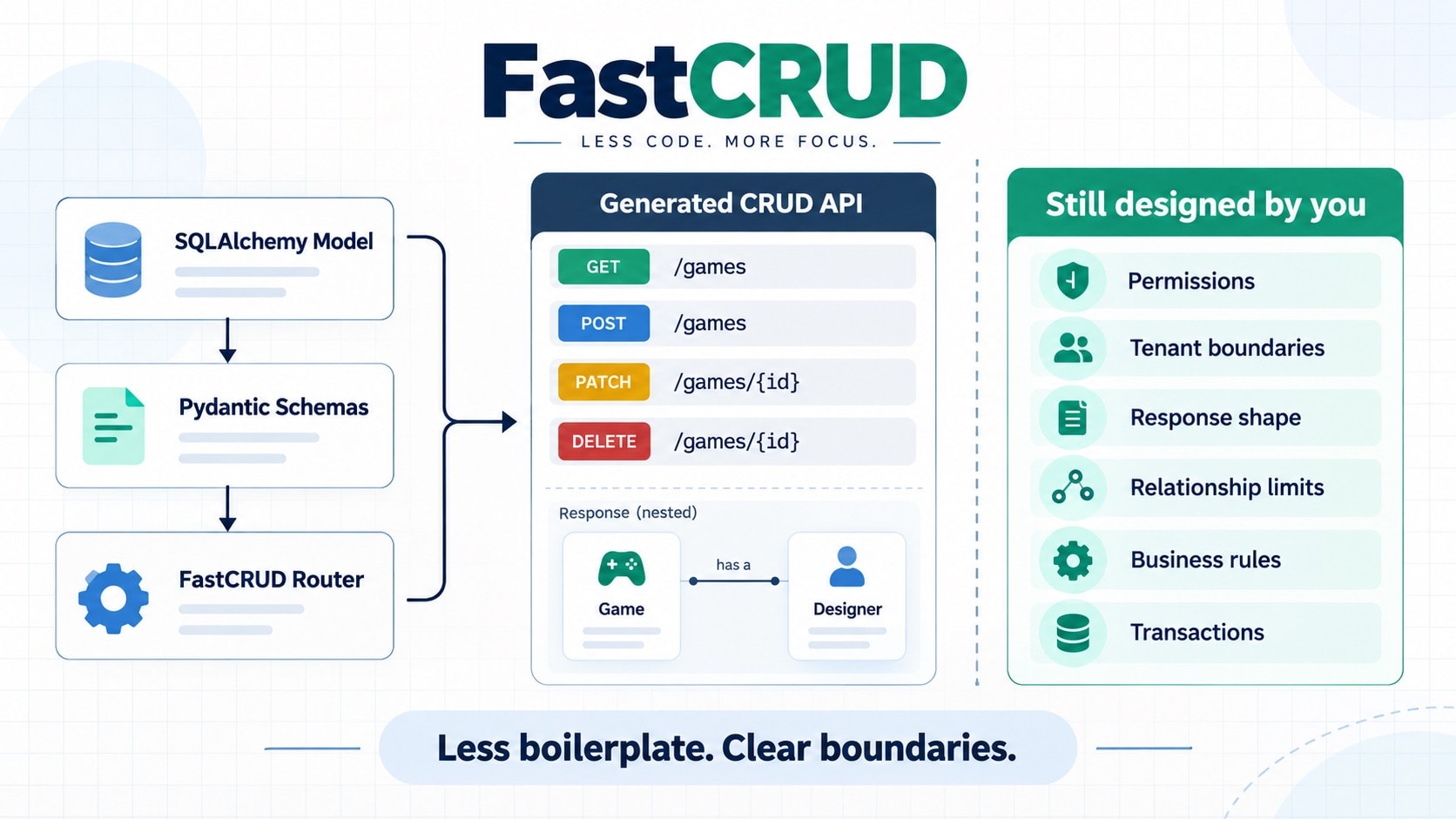
Quick summary Automate predictable CRUD: FastCRUD reduces repeated endpoint and data-access wiring. Expose relationships deliberately: control fields and response sizes. Keep business rules explicit: permissions, tenant boundaries and transactions remain design choices. Use custom endpoints when needed: complex domain workflows may need a service layer. One FastAPI tool I’ve found genuinely useful lately is FastCRUD. […]
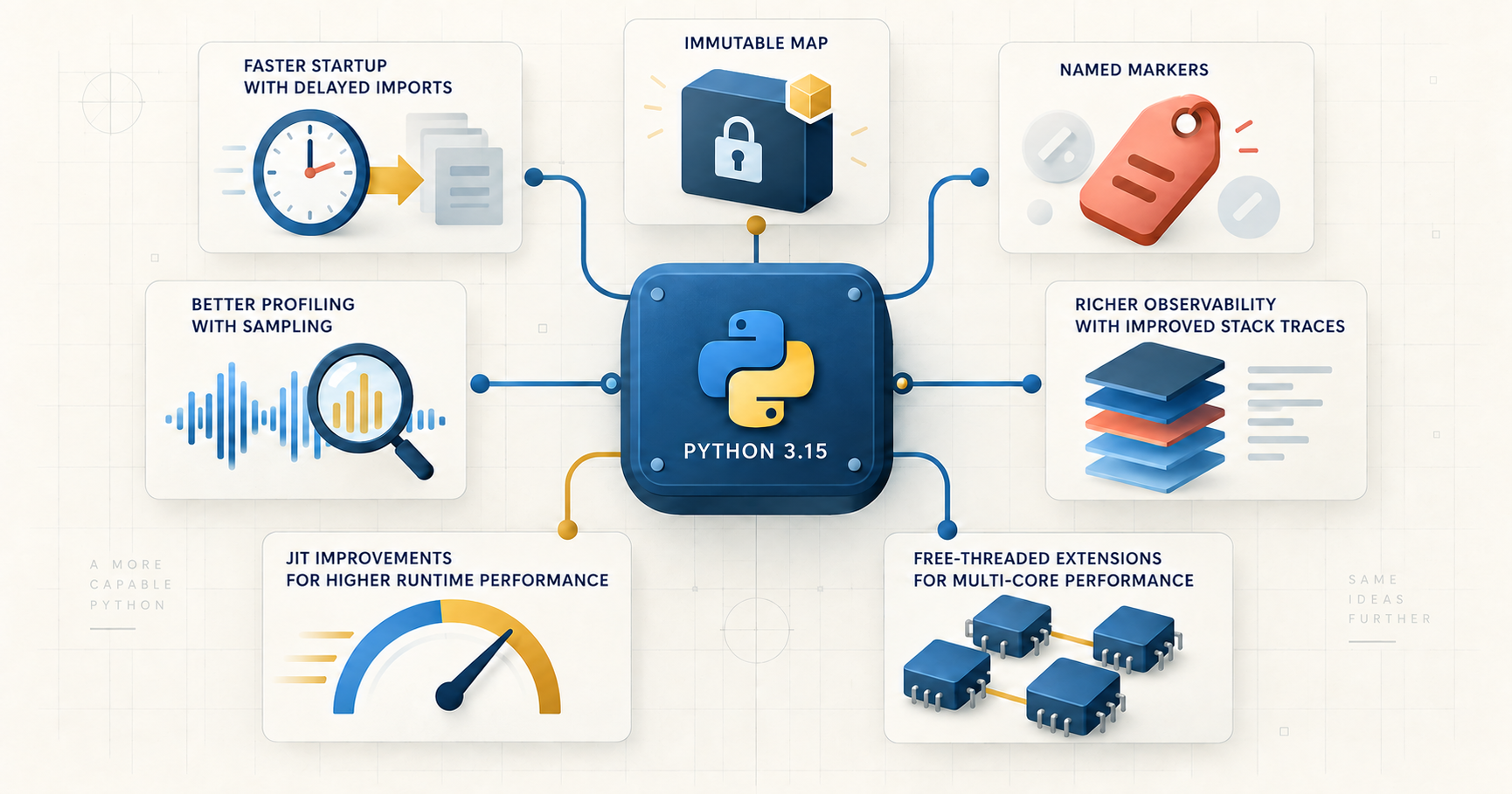
Quick summary The article reviews seven Python 3.15 changes: its focus includes imports, immutable data, API design and developer tooling. Adopt features for a concrete need: measure startup or workload behaviour before changing working code. Check compatibility first: dependencies and native extensions can determine when a runtime upgrade is practical. Upgrade with evidence: test in […]

Quick summary TurboVec is presented in its repository as a Rust vector index with Python bindings. The project is described as being built on TurboQuant. Google Research presents TurboQuant as work focused on AI efficiency through extreme compression. Benchmarks, retrieval quality, integration requirements, licensing, and operational fit should be checked against a representative workload before […]

Quick summary Start with a small program: install Python, check the command works and run a simple file. Learn by practising: repeat the write, run and adjust cycle rather than trying to memorise everything. Explore useful foundations: readable syntax and a broad library ecosystem support many kinds of projects. Choose a modest first task: automation, […]

Quick summary Store and work with data: variables and basic types provide the building blocks of Python programs. Control execution: conditions and loops determine which steps run and when they repeat. Organise reusable logic: functions group code around a specific task. Use files and libraries: reading, writing and importing modules extend what a program can […]

Quick summary Web scraping extracts website data: Python can automate collection from web pages. Prefer an available API: a supported data interface is generally more stable than parsing page layouts. Use scraping selectively: the article introduces it as an alternative when an appropriate API is unavailable. Respect site restrictions: check the rules governing automated access […]

Quick summary Represent work as a graph: nodes perform tasks and edges control transitions. Make state explicit: a shared schema supports context across steps. Build incrementally: define state, create nodes, connect them and run the agent. Observe behaviour: the tutorial also discusses caching, parallel work and debugging. Creating sophisticated conversational agents requires more than just […]

Quick summary Use specialist handoffs: the article presents a peer-to-peer alternative to supervision. Preserve context: shared state tracks the active agent and conversation. Keep roles focused: the example separates general questions, science and translation. Make routing explicit: handoff tools connect workers into one workflow. Imagine building powerful multi-agent systems with LangGraph Swarm, where agents collaborate […]