
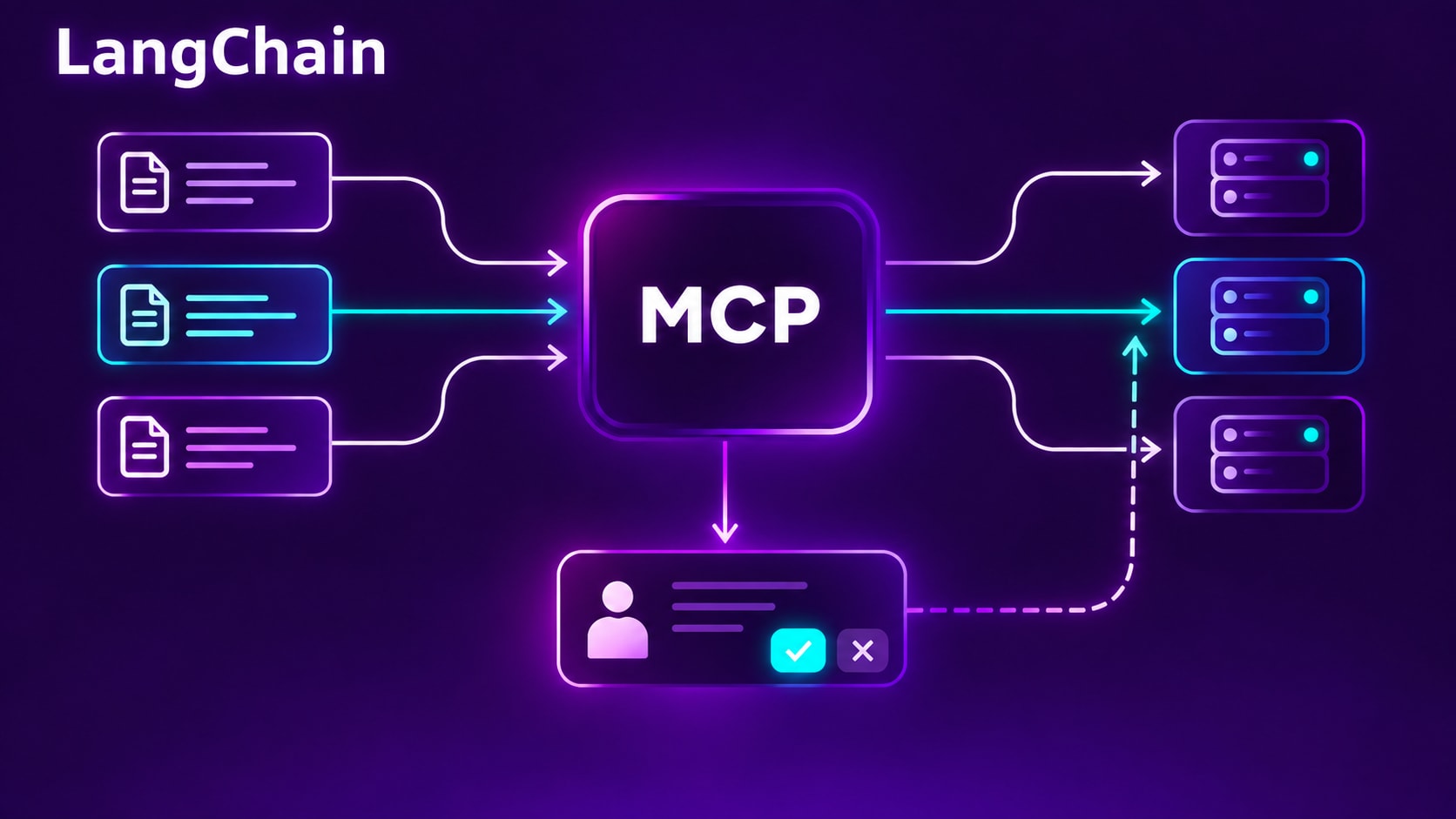
In brief LangChain MCP Adapter 2.0 supports stateless MCP. Modern servers no longer need a transport session to persist between tool calls, which makes ordinary load balancing easier. Stateless transport does not remove application state. Your booking, payment, or other workflow still needs durable identifiers and storage. Tools can pause for a person. MCP elicitation […]
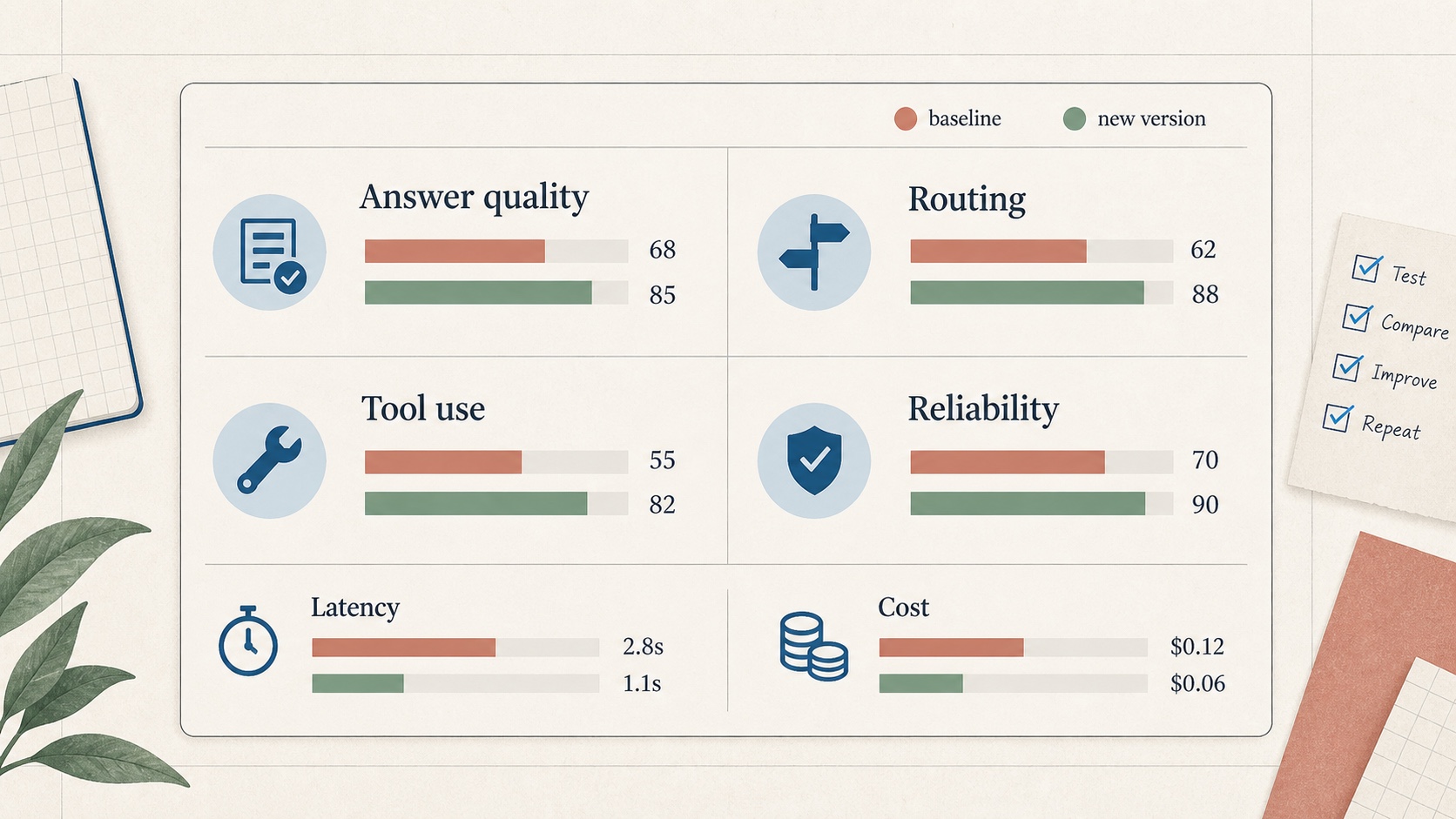
Quick summary Evaluate the whole graph: assess answers, routing, tool use, reliability and cost. Use deliberate test cases: cover ordinary requests, edge cases and safe failures. Compare against a baseline: combine offline tests with production feedback. Apply focused human review: use a consistent rubric where judgement matters. LangGraph evaluation turns a convincing multi-agent demo into […]
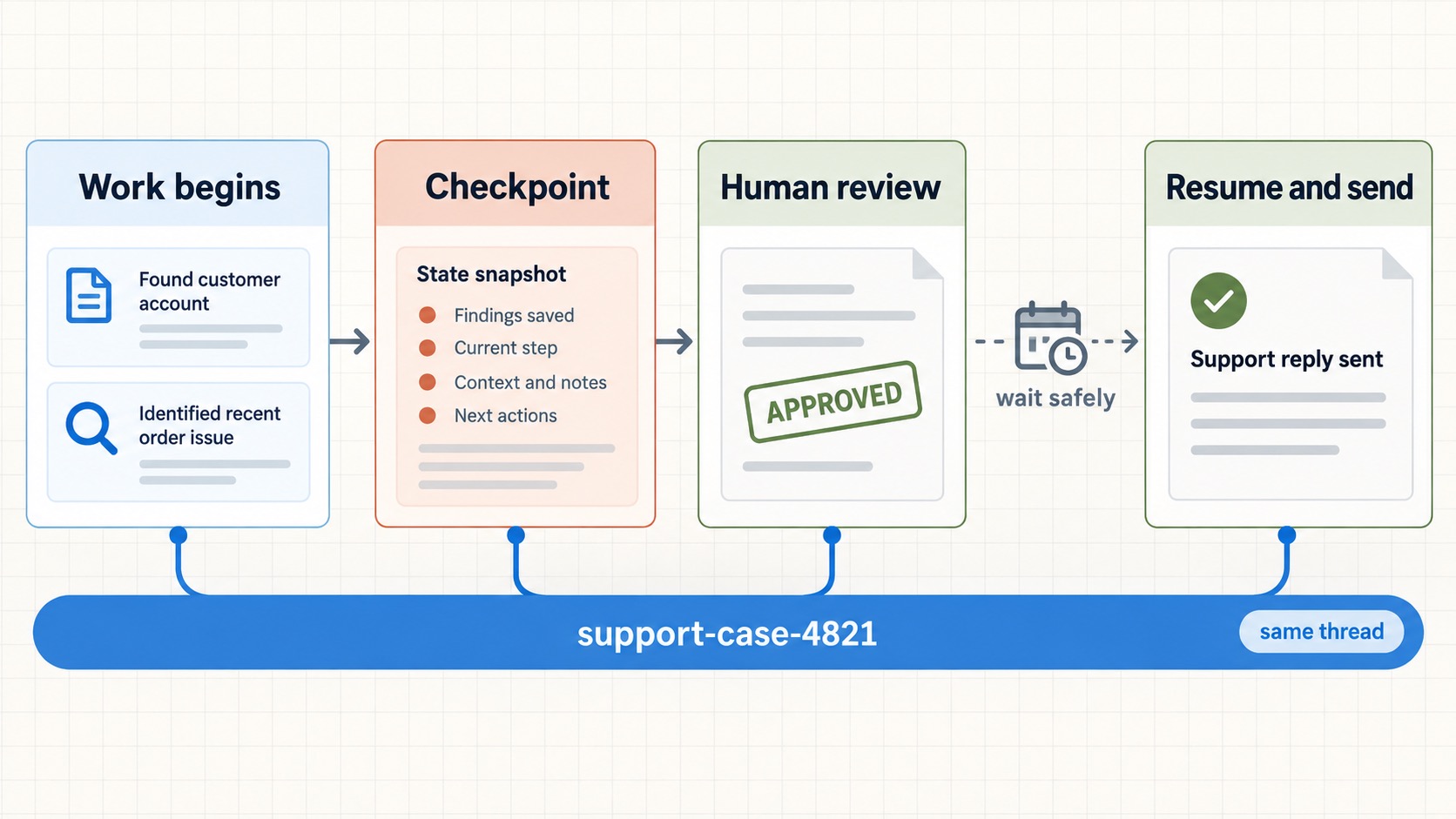
Quick summary Checkpoint state: persistence lets a graph pause, recover and continue. Resume the same thread: reuse its identifier and supply the review decision. Design for replay: repeated execution must not duplicate consequential actions. Use durable storage: production needs an appropriate backend and retention policy. LangGraph persistence is what makes a multi-agent workflow safe to […]
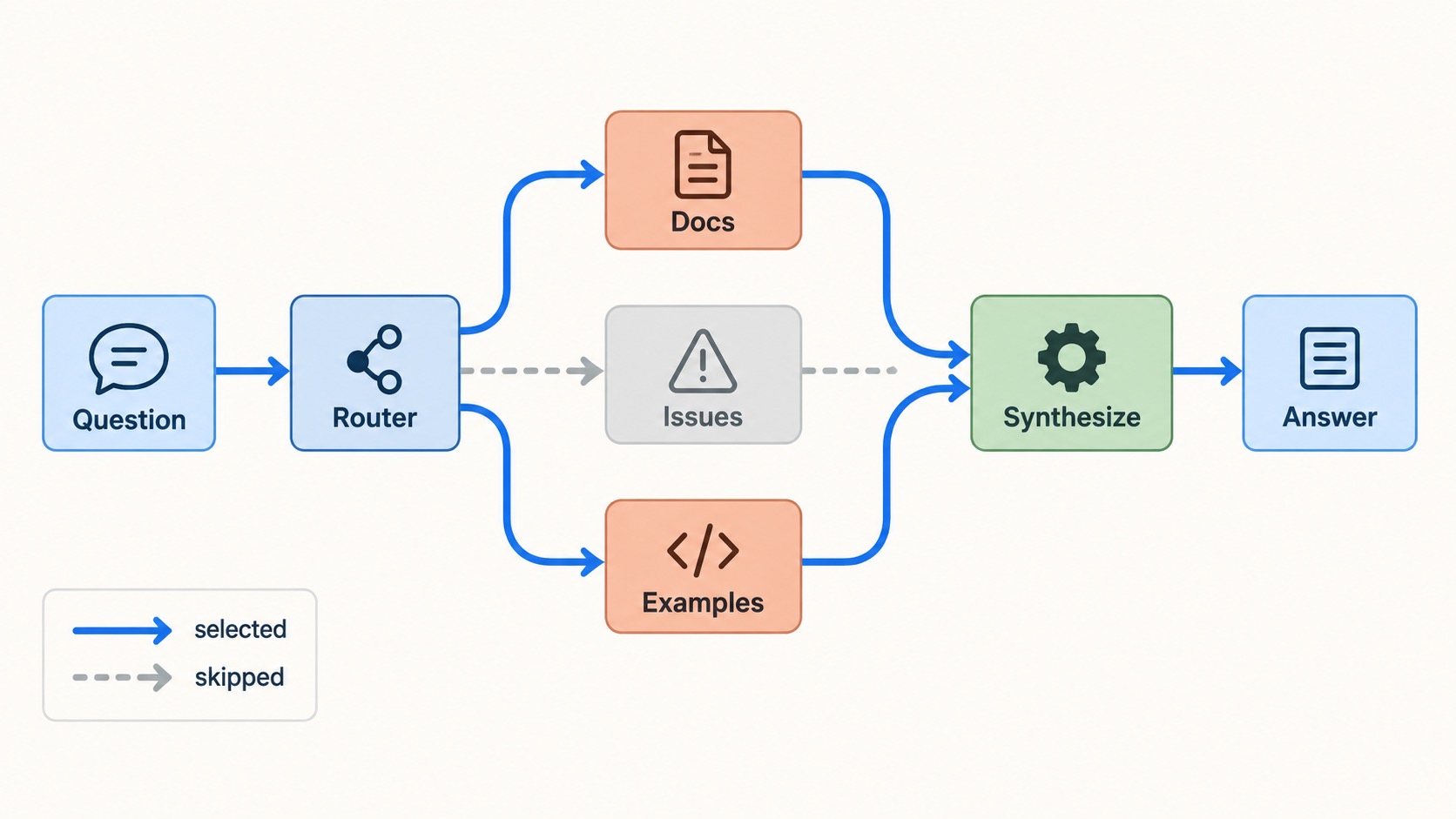
Quick summary Route: inspect the question and select the specialists that can help. Fan out: create one targeted task for each selected worker. Merge: wait for the active branches, then synthesize their findings. LangGraph routing is the point where a multi-agent graph stops broadcasting work and starts making deliberate choices. It decides which specialist should […]
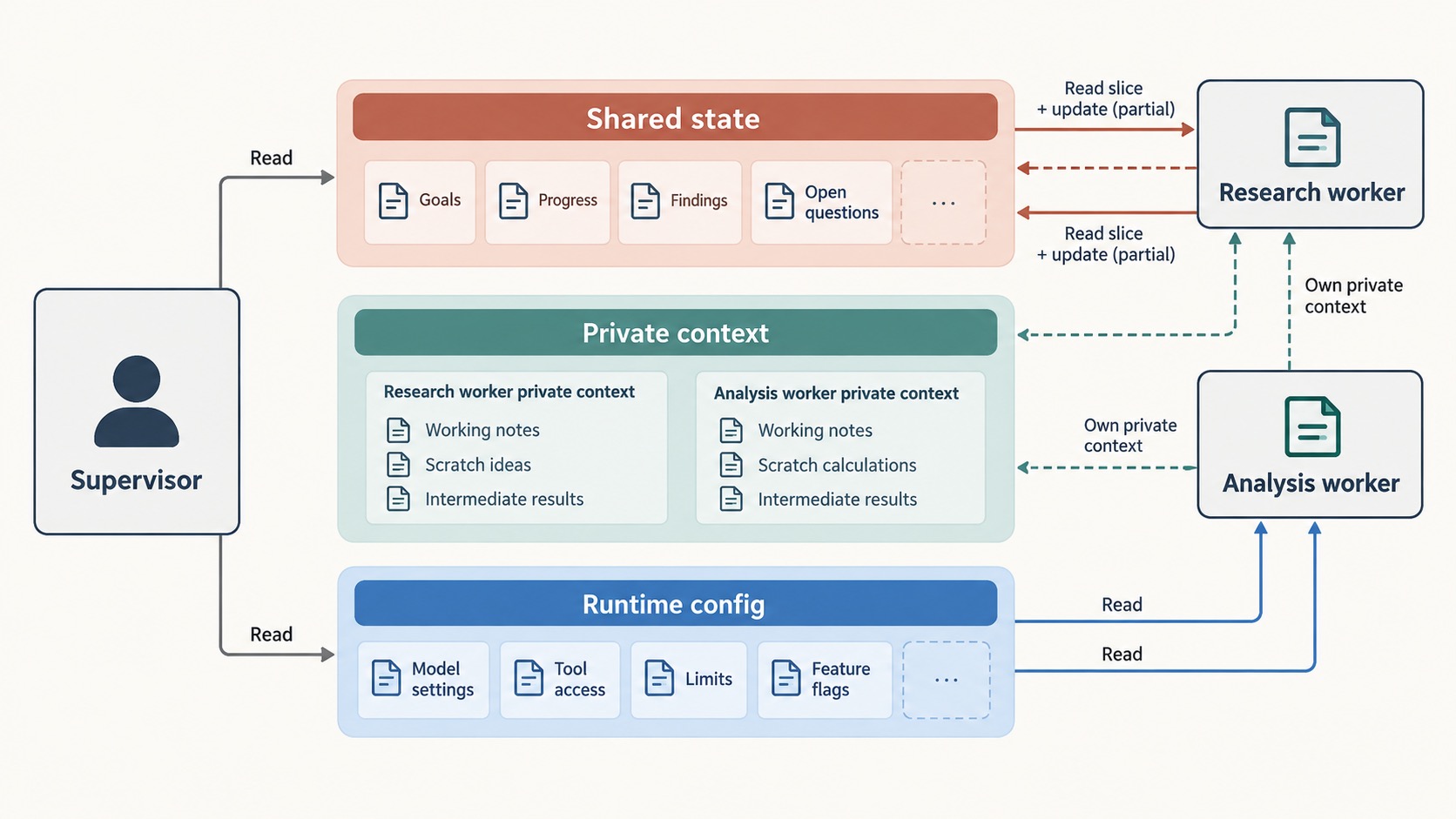
Quick summary Define a state contract: make field ownership, inputs and updates explicit. Separate context types: shared facts, private material and long-term memory serve different purposes. Return partial updates: use deliberate reducers instead of mutating a shared snapshot. Test data flow: verify merge behaviour and the context each worker receives. LangGraph shared state is where […]
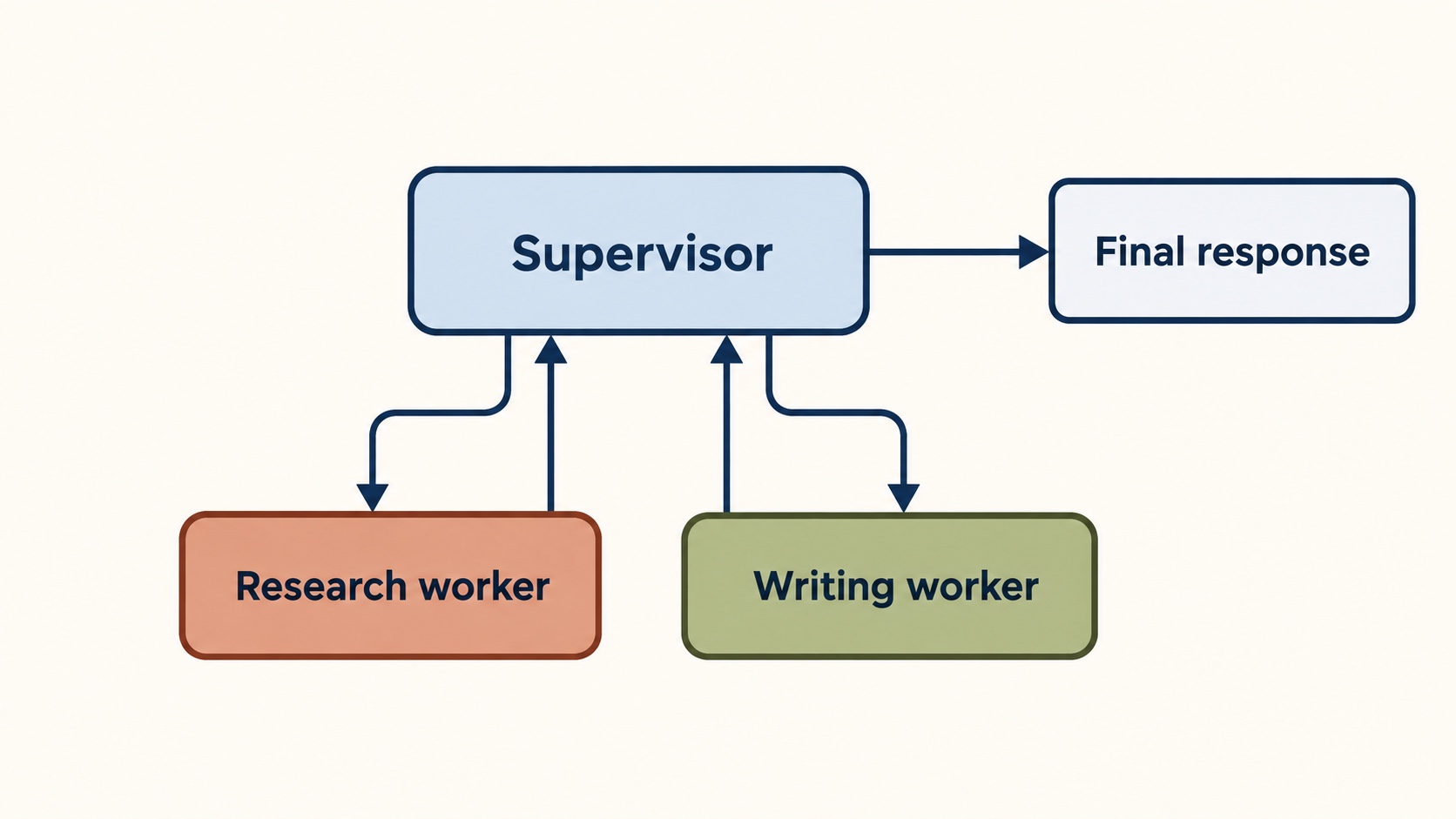
Quick summary Give coordination a clear owner: a supervisor selects specialists and remains responsible for the final response. Keep workers focused: supply bounded tasks and request concise, structured results. Control the workflow in code: enforce budgets, permissions and stopping conditions outside model instructions. Start simple: introduce specialists only when separate responsibilities make the system easier […]
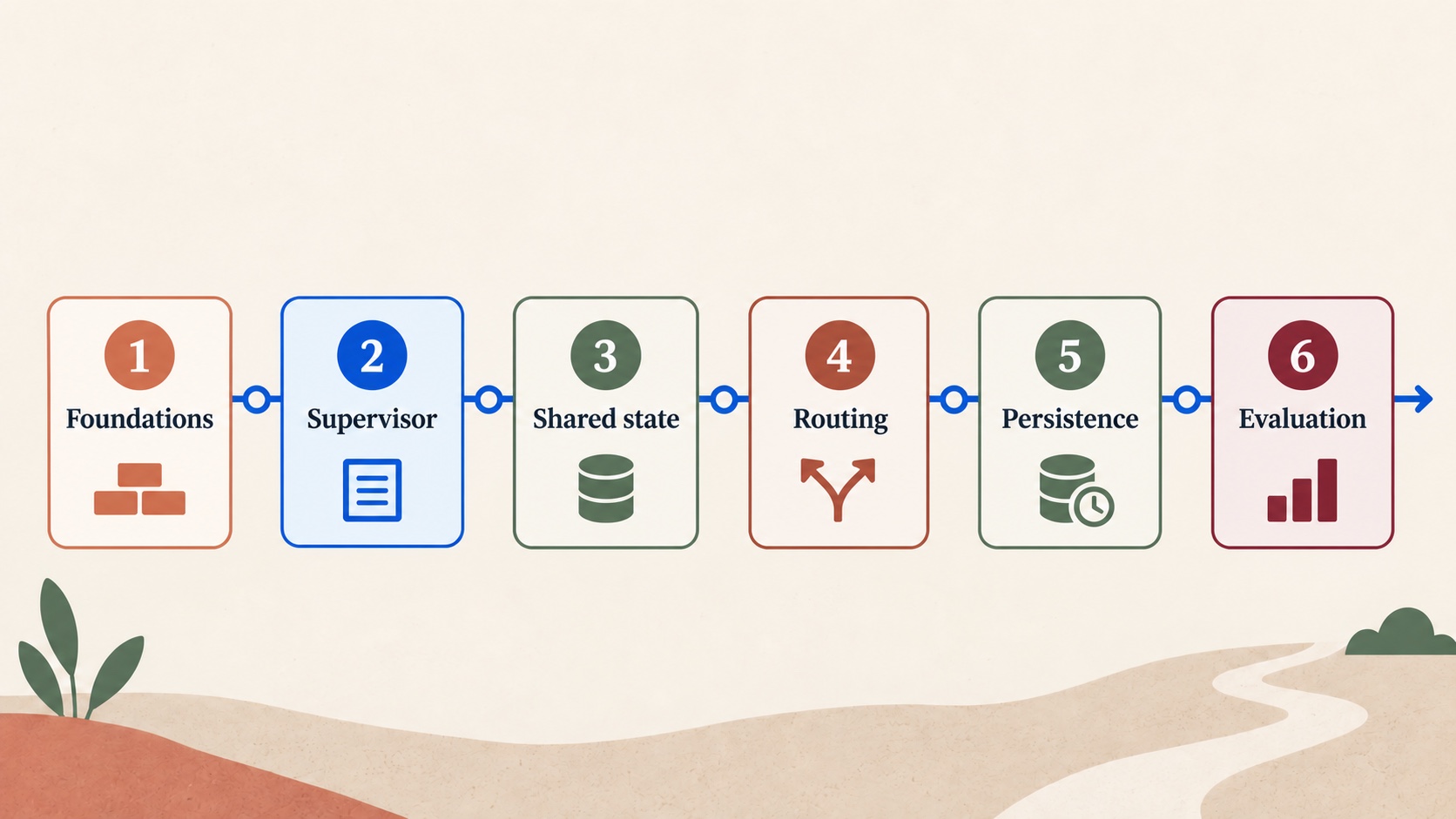
Quick summary Follow a progressive learning path: move from a stateful conversational agent to coordinated specialists. Add one capability at a time: the series covers supervisors, shared context, routing, persistence and evaluation. Make responsibilities explicit: separate planning, execution, data flow and recovery. Build for observability: favour understandable state and testable behaviour over adding more agents. […]
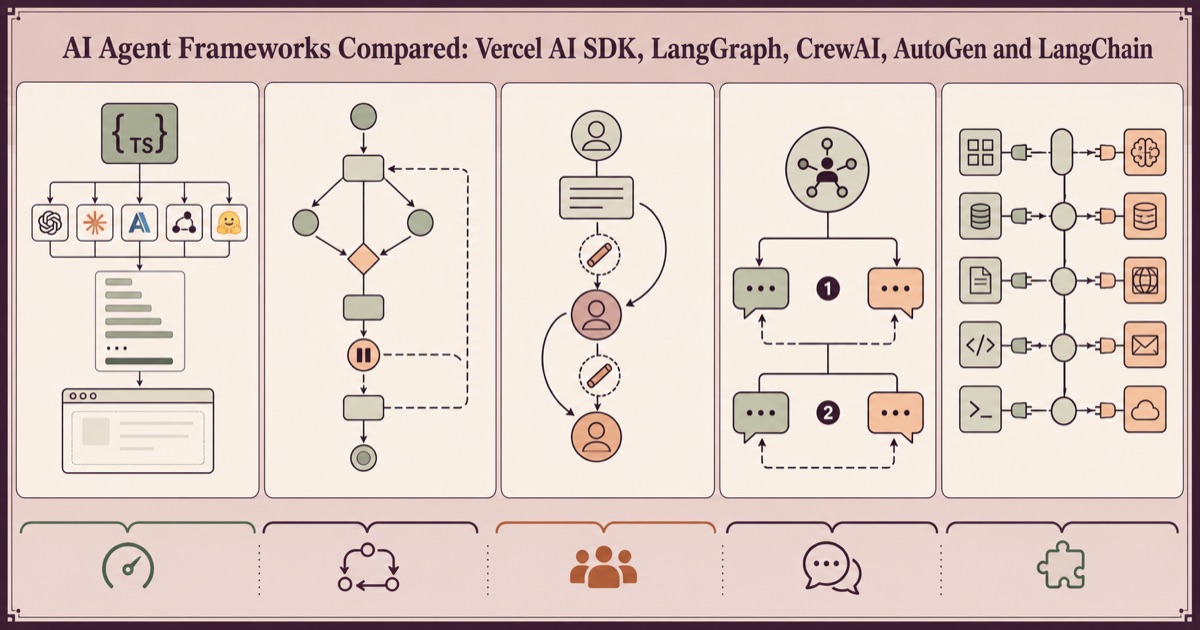
Quick summary Choose Vercel AI SDK first when a TypeScript application needs provider flexibility and streamed model output. Choose LangGraph first when the central problem is explicit agent orchestration. Evaluate CrewAI and AutoGen for agent-oriented patterns, then use their current documentation for feature-level decisions. Finally, do not infer deployment, licensing, persistence or operational fit from […]