

Quick summary Start with a small program: install Python, check the command works and run a simple file. Learn by practising: repeat the write, run and adjust cycle rather than trying to memorise everything. Explore useful foundations: readable syntax and a broad library ecosystem support many kinds of projects. Choose a modest first task: automation, […]

Quick summary Store and work with data: variables and basic types provide the building blocks of Python programs. Control execution: conditions and loops determine which steps run and when they repeat. Organise reusable logic: functions group code around a specific task. Use files and libraries: reading, writing and importing modules extend what a program can […]

Quick summary Squaring can change order: negative values make a sorted input different from a sorted list of squares. Compare both ends: two pointers identify the largest remaining absolute value. Build the sorted result efficiently: place larger squares at the end and move the corresponding pointer inward. Use the structure of the input: the sorted-array […]

Quick summary MLOps spans the lifecycle: connect experimentation, deployment, monitoring and maintenance. Track code and data: versioning helps teams understand and reproduce changes. Record experiments: compare model runs instead of relying on informal notes. Build dependable operations: pipelines, compute planning and tests support repeatable machine-learning workflows. In the realm of machine learning (ML), the rise […]
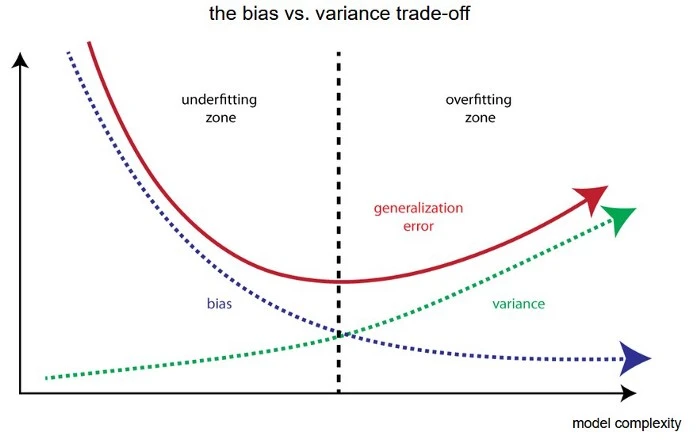
Quick summary High bias misses useful patterns: an overly simple model can make systematic prediction errors. High variance follows noise: predictions can change sharply when the training data changes. Compare training and test behaviour: underfitting and overfitting show different error patterns. Aim for generalisation: learning the training set well is not enough if performance fails […]

Quick summary Decision trees split data through questions: branches lead from feature tests to predictions at leaf nodes. Choose informative splits: the goal is to reduce uncertainty about the target. Entropy and information gain are related: information gain measures the reduction in entropy after a split. Gini provides another criterion: impurity measures help compare candidate […]
Quick summary Combine multiple models: an ensemble brings individual predictions together. Reduce prediction error: the article frames ensembles as a way to address bias or variance. Recognise common approaches: bagging, boosting and stacking organise combinations differently. Random forests are one example: they aggregate the predictions of multiple decision trees. An ensemble methods are technique which uses […]

Quick summary Classification predicts categories: the target is a class label, sometimes supported by a probability. Regression predicts quantities: the target represents a numerical amount. Some model families support both: the task and configuration determine how they are used. Match evaluation to the target: choose metrics that reflect the prediction problem rather than judging all […]

Quick summary Underfitting misses the signal: a model may be too simple to capture useful relationships. Overfitting follows noise: strong training performance can hide poor results on new data. Inspect both kinds of error: training and validation behaviour help distinguish the problems. Adjust complexity deliberately: features, model flexibility and regularisation influence the balance. Welcome to […]
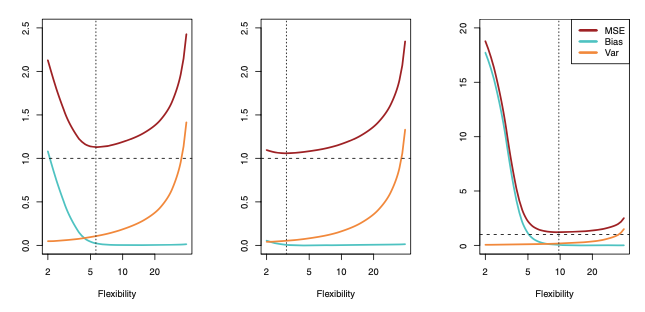
Quick summary Model flexibility changes the balance: the examples show bias falling while variance rises. The best balance depends on the data: a near-linear relationship behaves differently from a strongly nonlinear one. Test error guides the choice: a more flexible model does not necessarily produce a better result. Avoid either extreme: useful generalisation requires controlling […]

Quick summary Web scraping extracts website data: Python can automate collection from web pages. Prefer an available API: a supported data interface is generally more stable than parsing page layouts. Use scraping selectively: the article introduces it as an alternative when an appropriate API is unavailable. Respect site restrictions: check the rules governing automated access […]

Quick summary Send your name to Mars: the post links to NASA’s virtual boarding-pass initiative. Check the programme details: use the linked sign-up information to explore the activity and its availability. Have you signed up yet to send your name to Mars on a future NASA mission and get a free “boarding pass?” If not, […]

Quick summary RAG combines retrieval with generation: relevant source material supplies context for a model’s response. Build both parts deliberately: choose the data, implement retrieval and connect it to the generative model. Test the complete pipeline: assess how retrieved material affects the usefulness of the answer. Plan for operational challenges: data quality, integration and scaling […]

Quick summary Train across distributed data: federated learning keeps local examples on participating devices or servers. Share updates rather than raw datasets: a coordinating system can aggregate training results into a model. Match the architecture to the setting: the article discusses centralised, decentralised and heterogeneous approaches. Address the remaining challenges: communication, device differences and privacy […]

Quick summary The article introduces Lumiere: it describes a video-generation approach built around a Space-Time U-Net. Explore creative applications: examples include image animation, stylised video and text-guided editing. Consider the limits: coherent transitions and complex video behaviour remain part of the discussion. Use synthetic media responsibly: creative possibilities also raise questions about misuse and deepfakes. […]

Quick summary The article explores text-to-video generation: prompts describe scenes, subjects and motion. Visual detail is only one part of the task: consistency across shots and events also matters. Recognise the limitations described: physical interactions, spatial relationships and event sequences can go wrong. Inspect generated results: a compelling scene does not guarantee that its motion […]

Quick summary The comparison centres on embeddings: the article contrasts Nomic with selected OpenAI models. Openness is a main theme: model access, training materials and reproducibility shape the discussion. Read benchmark results by task: the table presents different evaluations rather than one universal measure. Consider application needs: context length, auditability and retrieval performance affect model […]

Quick summary The article introduces the early Gemma models: it discusses text generation, question answering and summarisation. Different variants serve different uses: pre-trained and instruction-tuned models are part of the overview. Evaluate beyond benchmark scores: the article also addresses training, hardware and practical deployment. Keep limitations in view: bias, task difficulty and language nuance require […]
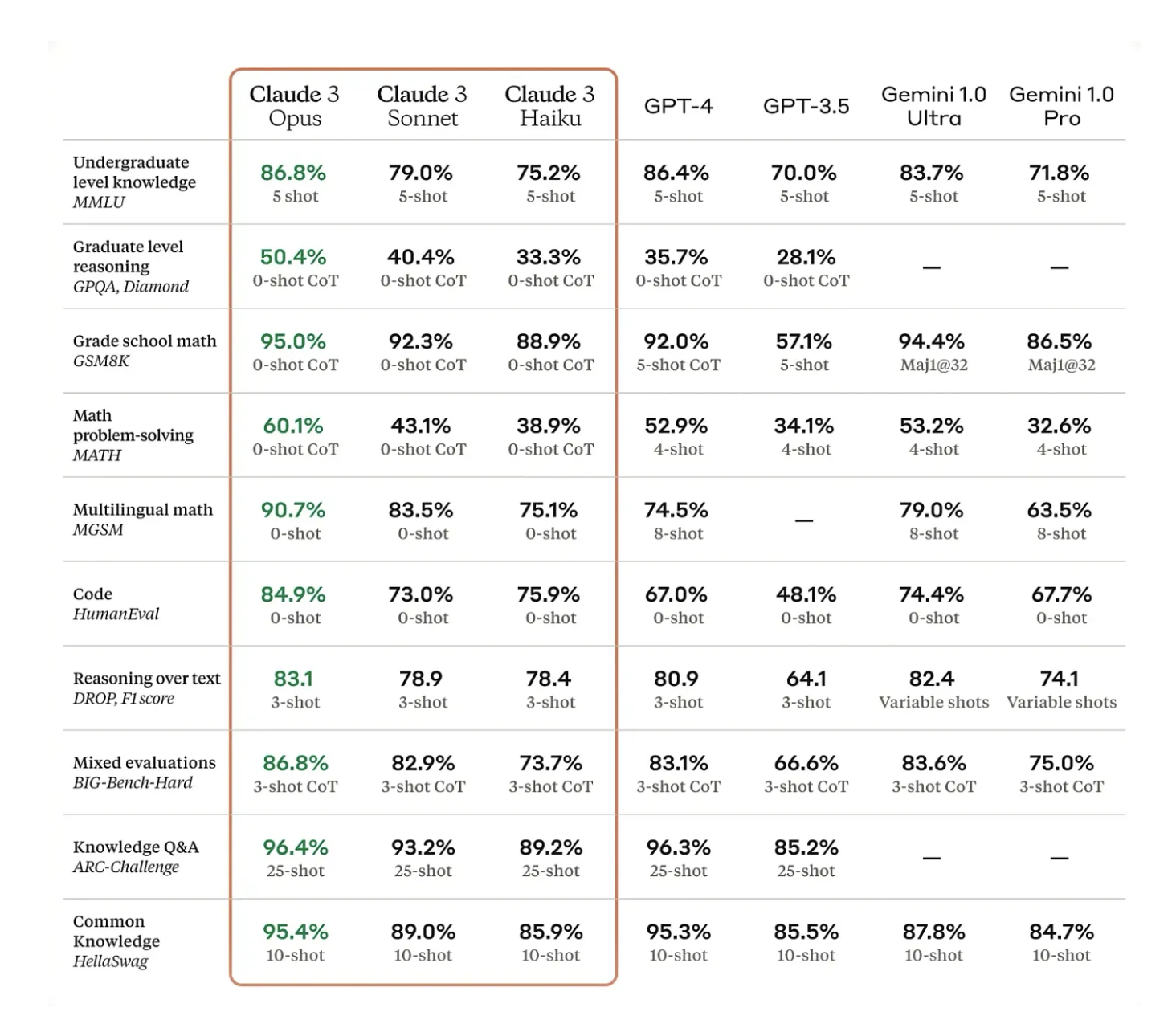
Quick summary The article compares Claude 3 with GPT-4: it discusses capability claims and competition between model providers. Distinguish claims from practical fit: reported demonstrations do not replace evaluation on your own tasks. Stay adaptable: the article encourages developers to assess new models as the landscape changes. Choose for the use case: a model’s particular […]

Quick summary Package the development database: Docker provides a repeatable PostgreSQL environment. Add vector support: the example builds and installs the pgvector extension. Coordinate setup files: Compose, the Dockerfile and an initialisation script work together. Keep configuration explicit: connection settings and persistent storage are part of the setup. When it comes to managing databases in […]
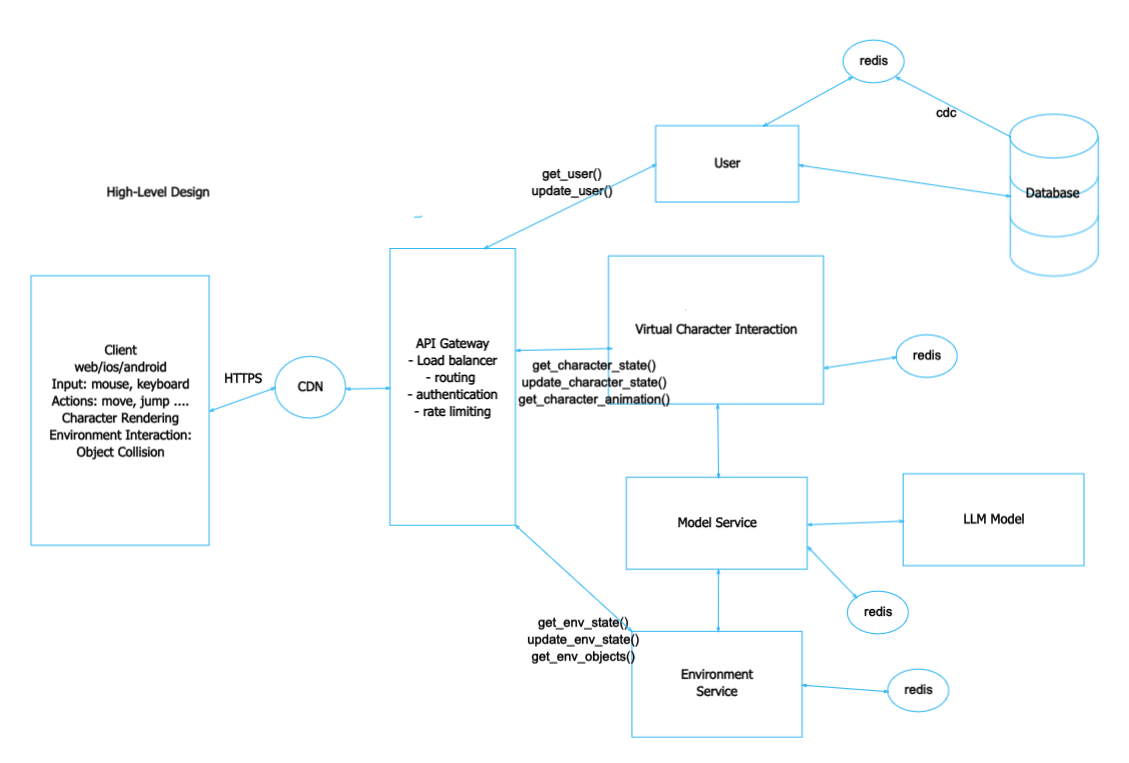
Quick summary Separate responsibilities: coordinate character, environment and model services. Use Redis for coordination: combine shared state with asynchronous processing. Design around latency and scale: real-time interaction depends on the complete processing path. Define boundaries first: entities, APIs and scope guide the architecture. Understanding the Problem What is the System? This system is designed to […]
Quick summary Represent work as a graph: nodes perform tasks and edges control transitions. Make state explicit: a shared schema supports context across steps. Build incrementally: define state, create nodes, connect them and run the agent. Observe behaviour: the tutorial also discusses caching, parallel work and debugging. Creating sophisticated conversational agents requires more than just […]
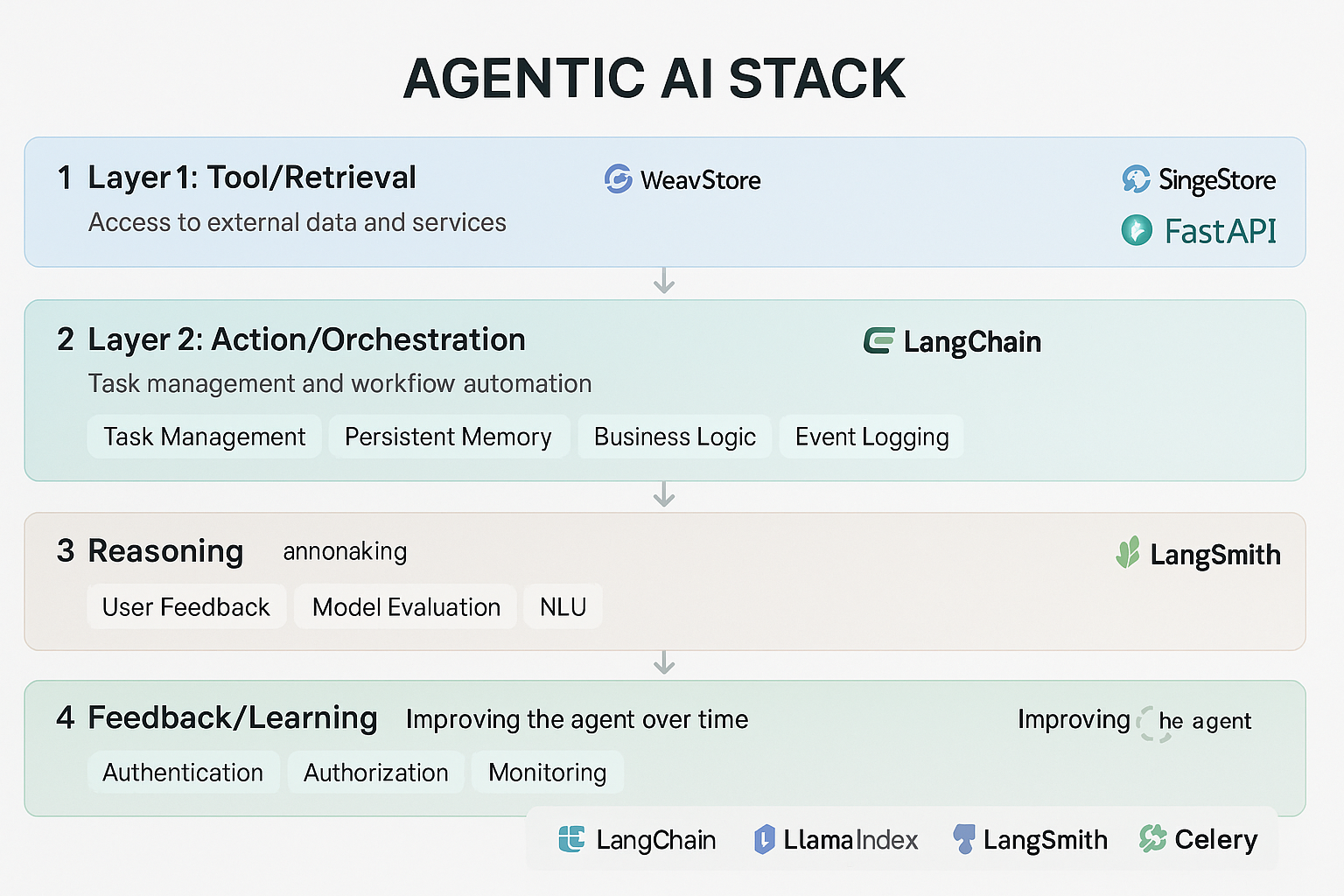
Quick summary Organise by responsibility: the article presents five layers of an agent system. Connect data to action: retrieval and tools feed orchestration and reasoning. Include feedback: evaluation and operational signals support improvement. Build security into the stack: access controls belong alongside functional capabilities. The Agentic AI Stack is a modern framework designed to build […]
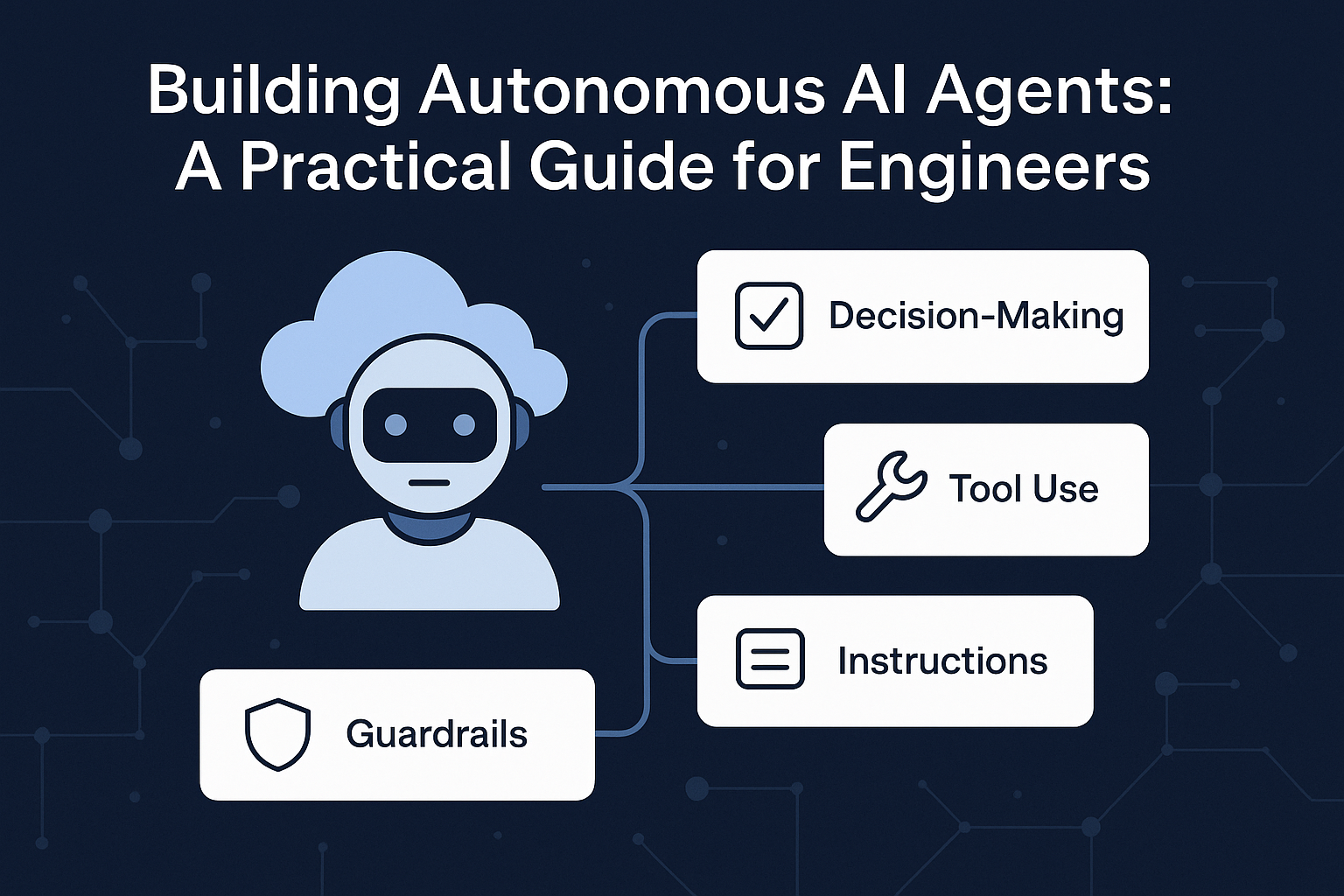
Quick summary Choose the right problem: conventional automation may suit well-defined tasks. Define core components: models, tools, instructions and guardrails shape the system. Start simple: add multiple agents when specialisation justifies the complexity. Deploy incrementally: evaluate behaviour and retain human escalation. As AI moves beyond simple chatbots, building AI agents that can reason and act […]

Quick summary Use specialist handoffs: the article presents a peer-to-peer alternative to supervision. Preserve context: shared state tracks the active agent and conversation. Keep roles focused: the example separates general questions, science and translation. Make routing explicit: handoff tools connect workers into one workflow. Imagine building powerful multi-agent systems with LangGraph Swarm, where agents collaborate […]

Quick summary Trace startup in stages: entrypoint, initialisation, session setup and rendering. Keep fast paths lightweight: simple commands need not load the full interactive application. Overlap independent work: prefetching can reduce visible startup delays. Separate responsibilities: orchestration and deferred work provide reusable design lessons. When you type claude into your terminal, there is a highly sophisticated Claude Code […]

Quick summary Hermes Agent is best for recurring workflows with a clear input, defined output and human review step. Persistent memory and reusable skills reduce repeated setup but require deliberate data management. Messaging gateways improve convenience while making identity and authorisation essential. Start with a read-only or draft-only task before granting credentials, publishing rights or […]

Quick summary Treat context as a limited working set for the next action, not an archive of everything the agent has seen. Keep durable facts separate from transient conversation history and task-specific retrieved evidence. Retrieve a small, explainable set of relevant items, then filter or compress the rest before it reaches the model. Reserve tokens […]

Quick summary Combine predictions: Ensembles use voting, averaging or a learned rule to combine multiple models. Different approaches: Bagging, boosting and stacking combine models in different ways. Diversity matters: Models with useful, varied information can improve stability and predictive performance. Compare with a baseline: More models do not automatically improve results; evaluate the combined system […]
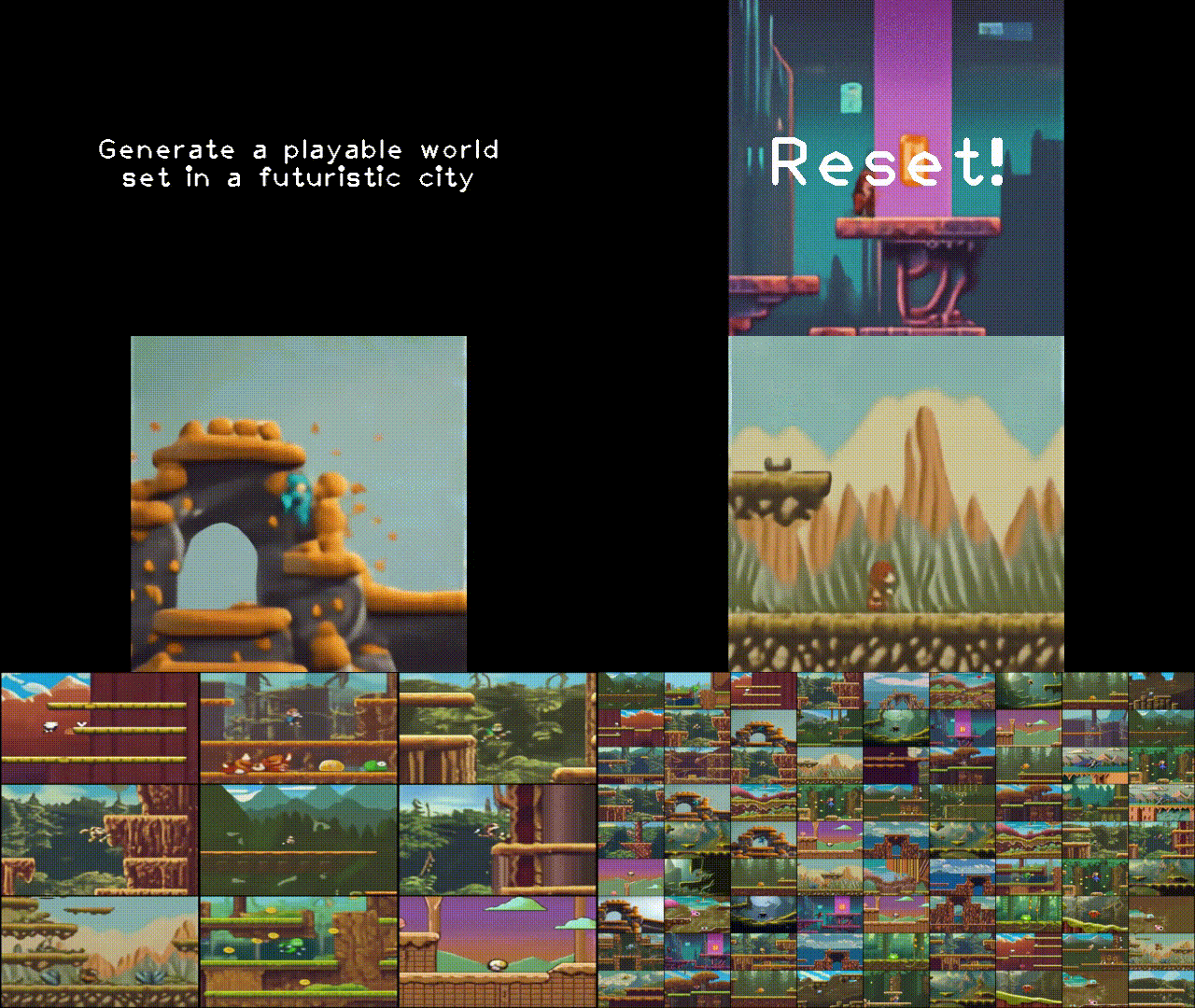
Quick summary Interactive generation: The article introduces Genie as a model for generating controllable environments from visual inputs. Learning from video: It describes learning patterns of movement and interaction without explicit action labels. Creative possibilities: Sketches and images provide starting points for exploring generated worlds. Research direction: The article considers uses in creative prototyping and […]
Quick summary Explore generated environments: the article discusses turning visual inputs into controllable scenes. Learn dynamics from video: the approach centres on learning without explicit action labels. Consider creative uses: sketches and photographs can act as starting points. Simulation is another motivation: generated environments could support varied agent-training settings. Imagine if you could take a […]
- 1
- 2